⏳ Early-bird ₹60,000 — extended by one week, ends July 15, 2026 —d —h —m —s price rises after · lock it in now
The world's first harness engineering workshop · a Vizuara live cohort · Aug 3–7, 2026 · 7:00–9:00 AM IST

Build the layer that turns a model into an agent.

Claude Code is not a model — it is a harness. In five mornings you build that harness from scratch: the loop, the tools, the context engine, the recovery systems. You leave with your own working coding agent, in the spirit of pi.

THE HARNESS ENGINEERING WORKSHOP
> build me a coding agent

read(src/loop.ts)
edit(src/tools/bash.ts) — approved
checkpoint saved (turn 47)
compacting context 118k → 9k tokens
spawning subagent: verifier
tests pass — session resumable

day 1  the agent loop
day 2  tools & sandboxing
day 3  context engineering
day 4  durability & recovery
day 5  your own harness

aug 3–7, 2026 · 7:00–9:00 AM IST · early bird ₹60,000 — going up
Two ways to enroll

Pick your path in.

The workshop on its own, or the workshop paired with the fully-recorded Claude Certified Architect track. Choose before you check out.

Option A · the workshop

Harness Engineering

The full 5-day live cohort, Aug 3–7. Recordings, code checkpoints, and live review of your harness.

₹60,000

early-bird price · ends July 15

Enroll — ₹60,000
Option B · best value

Workshop + Claude Certified Architect

Add the Claude Certified Architect track — a fully recorded course plus mock exams (₹45,000 on its own): recorded sessions across all 5 CCAF exam domains, hands-on labs, and a full 60-question mock exam.

₹85,000 ₹1,05,000

save ₹20,000 · certification path included

Enroll in the bundle — ₹85,000

Full breakdown below · questions? email team@vizuara.com

The thesis

Models are commodities. Harnesses are the product.

Everyone calls the same APIs. What separates Claude Code, pi, and Hermes from a thousand dead demos is everything wrapped around the model — the loop that keeps it working, the tools that let it act, the context machinery that keeps it sane, and the recovery systems that keep it alive. That layer has a name now, and it is a discipline you can learn.

Prompt engineering 2023 — what you say

Crafting one good instruction for one good completion. Necessary, transactional, and nowhere near sufficient for an agent that runs for two hundred turns.

Context engineering 2025 — what the model sees

Deciding what enters the window every turn: memory, compaction, retrieval, system state. The scarcest resource in the system is attention — someone has to allocate it.

Harness engineering now — what the model lives inside

The full runtime: agent loop, tool contracts, permissions and sandboxing, durable execution, sub-agents, human-in-the-loop. Context engineering is one subsystem of it. This workshop is about the whole machine.

Case studies

We read the production harnesses. Then we build one.

Each day pairs first-principles building with a dissection of a real harness — how it actually implements the thing you just built by hand.

Anthropic

Claude Code

The reference production harness: permission modes, hooks, skills, MCP, sub-agent types, compaction. We use it as the anatomy chart for every subsystem we build.

pi.dev

pi

A minimal agentic harness — small surface, extensions, any model. The proof that a harness doesn't need to be enormous to be real. Your capstone is built in its spirit. pi.dev ↗

Nous Research

Hermes

An open agentic harness from a research lab — a different set of design choices for the same problems. We use it for projects and contrast throughout. hermes ↗

Curriculum

Five mornings. Five modules. One working harness.

Every session is 7:00–9:00 AM IST, live. Every module ends with your harness doing something it couldn't do the day before.

MODULE 01DAY 1 · 7–9 AM IST

The Anatomy of a Harness

  • Why "just call the API" fails: transactional inference vs. a real agent
  • Dissecting Claude Code, pi, and Hermes live — what every layer does
  • Prompt vs. context vs. harness engineering — precise boundaries
  • The agent loop from first principles: messages, turns, stop conditions, streaming
You build — a bare harness: model client, message array, and a hand-rolled loop that runs until the model stops asking for work.
MODULE 02DAY 2 · 7–9 AM IST

Tools & the Execution Environment

  • Tool schemas as contracts: read, write, edit, bash, search
  • Streaming tool calls and partial results into a terminal UI
  • Permission gates and approval modes — why Claude Code asks before rm
  • Sandboxing and the blast-radius problem; code-mode vs. tool-mode
You build — real file and shell tools wired into your loop. Your harness edits actual code on your machine, safely.
MODULE 03DAY 3 · 7–9 AM IST

Context Engineering Inside the Harness

  • Context budgets: what goes in every turn, what gets evicted
  • Compaction and summarization — surviving long sessions without losing the plot
  • Memory systems: session state, persistent memory files, the CLAUDE.md pattern
  • System prompts as infrastructure, not prose
You build — compaction plus a persistent memory layer, so your harness survives a 200-turn session.
MODULE 04DAY 4 · 7–9 AM IST

Durability, Recovery & Orchestration

  • Durable execution: checkpointing every model turn and tool call, replay on restart
  • Self-healing loops: retries, failure classification, resumable sessions
  • Sub-agents and handoffs — when one context can't hold the job
  • Supervision and human-in-the-loop: plans, approvals, escalation
You build — checkpointed execution and a sub-agent dispatcher with an approval gate.
MODULE 05DAY 5 · 7–9 AM IST

Production Harnesses & Capstone

  • pi internals: extensions, models.json, the minimal-surface philosophy
  • Hermes internals: a research lab's harness design choices
  • Claude Code internals: skills, hooks, MCP, sub-agent types
  • Evaluating a harness — how you know yours actually works
Capstone — assemble everything into your own pi-style harness and demo it: loop, tools, context engine, recovery, orchestration.
The project

By Friday, this runs on your machine — and you wrote every line.

Not a wrapper around someone else's agent SDK. A harness you own end to end: a terminal coding agent that reads and edits real files, asks before dangerous actions, compacts its own context, checkpoints every step, resumes after a crash, and dispatches sub-agents. Small enough to understand completely. Real enough to use on Monday.
Layer 1
The loop
streaming turns, stop conditions, tool dispatch
Layer 2
Tools + guardrails
file & shell tools, schemas, approval gates, sandbox
Layer 3
Context engine
budgets, compaction, memory files, system prompt
Layer 4
Durability
checkpoints, replay, resumable sessions
Layer 5
Orchestration
sub-agents, handoffs, human-in-the-loop
Ship
Your harness
demoed live on day 5, yours forever
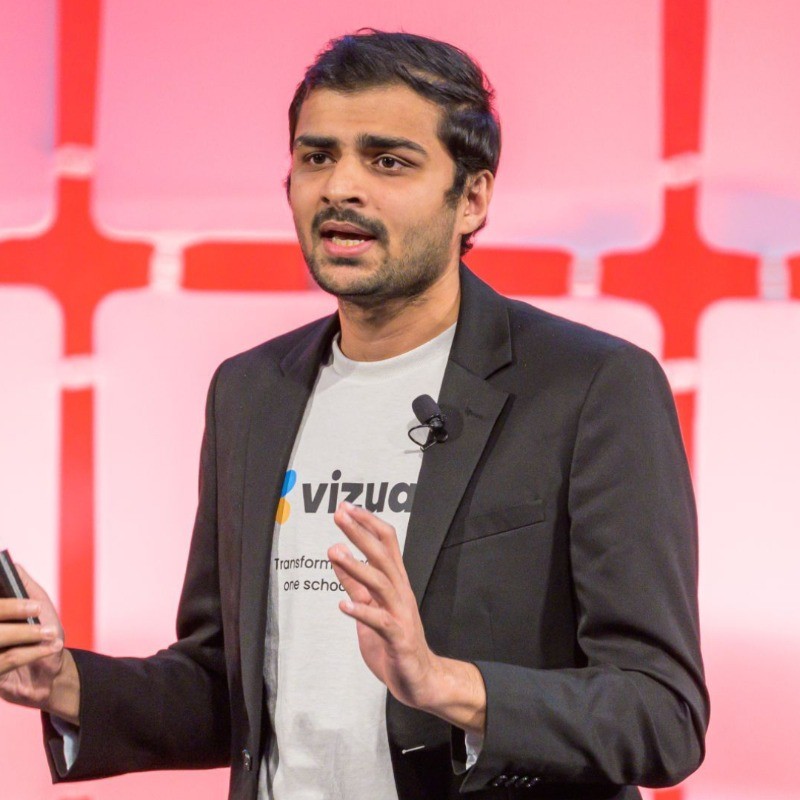
Dr. Raj Dandekar
Your instructor

Dr. Raj Dandekar

PhD, MIT · Co-founder, Vizuara AI Labs

Author of Manning's Build a DeepSeek Model (From Scratch) and creator of the Building LLMs from Scratch YouTube series — the from-scratch teaching philosophy this workshop is built on.

Raj builds AI-powered developer tools and agentic systems at Vizuara, and has taught live cohorts on LLMs from scratch, inference engineering, and agentic systems to thousands of engineers.

Manning author

Build a DeepSeek Model (From Scratch) — every layer of a frontier model, by hand.

From-scratch series

Building LLMs from Scratch on YouTube — watched by engineers worldwide.

Live cohorts

Thousands of engineers taught across Vizuara's workshop cohorts.

Details

The practical part.

Dates
Aug 3–7, 2026
Monday to Friday, daily 7:00–9:00 AM IST on Zoom, with recordings
Price
₹60,000
early-bird price until July 15, 2026 (extended by a week) — rises after · includes recordings, code checkpoints for every module, and the cohort community
Instructor
Raj Dandekar
PhD (MIT) · co-founder, Vizuara
Prerequisites
You code
comfort with Python or TypeScript and basic LLM API calls — no agent experience needed
Who it's for
Builders
engineers, tech leads, and founders who want to own the agent layer, not rent it
Seats
Limited
small cohort so every harness gets reviewed live
Pricing

Two ways in.

₹60,000 is the early-bird launch price — it runs until July 15, 2026 (extended by a week), then rises. And if you want the certification path too, the Claude Certified Architect track can be added at a bundle price.

The workshop

Harness Engineering

The full 5-day live cohort (Aug 3–7), recordings, code checkpoints, and live review of your harness.

₹60,000

early-bird price — ends July 15, then rises

Enroll — ₹60,000
Add-on · best value

+ Claude Certified Architect

Add Vizuara's Claude Certified Architect track — a fully recorded video course plus timed mock exams (₹45,000 on its own), built around the official Claude Certified Architect – Foundations exam guide. What's inside:

  • Recorded sessions across all 5 CCAF exam domains — agentic architecture, MCP tool design, Claude Code workflows, structured output, context engineering
  • Hands-on labs from the official preparation exercises
  • A full timed 60-question mock exam with scaled scoring & debrief
  • Certificate of completion · watch anytime, at your own pace

₹85,000 ₹1,05,000

workshop + certification track together · save ₹20,000

Enroll in the bundle — ₹85,000
FAQ

Questions, answered plainly.

Is this a course about using Claude Code?
No — it's about being able to build the kind of thing Claude Code is. We dissect Claude Code, pi, and Hermes as case studies, then you construct your own harness from first principles. You'll leave a much sharper user of those tools too, because you'll know exactly what they're doing under the hood.
How is this different from an "AI agents" course?
Most agent courses teach you to chain prompts inside someone else's framework. This workshop is about the infrastructure layer — loops, tool contracts, sandboxing, compaction, durable execution, orchestration — the part that makes agents survive contact with reality. You build it yourself instead of importing it.
Which model and language do we use?
The harness is model-agnostic by design — that's one of the lessons. Sessions build in TypeScript/Node with frontier-model APIs (Claude first-class); if you're a Python person you can follow along one-to-one. You'll need your own API key for the build sessions.
I can't make 7 AM every day. Is that fatal?
Every session is recorded and posted the same day, along with a code checkpoint for that module — so you can rebuild the day's layer at your own pace and rejoin live the next morning.
What exactly do I have at the end?
A working terminal coding agent you wrote yourself — loop, tools, permission gates, context compaction, memory, checkpointed execution, and sub-agents — plus the complete reference implementation, session recordings, and a mental model of harness engineering you can apply at work immediately.
How does the early bird pricing work?
₹60,000 is the early-bird launch price for the first cohort of the world's first harness engineering workshop. It has been extended by one week and now ends July 15, 2026; after that the price rises — enrolling early locks it in. The cohort itself runs August 3–7, 2026.
What is the Claude Certified Architect add-on?
Vizuara's Claude Certified Architect track — a complete recorded video course plus mock exams that prepare you for the Claude Certified Architect certification. On its own it is ₹45,000. Taken together with this workshop, the bundle is ₹85,000 instead of ₹1,05,000 — you save ₹20,000 and pair the hands-on harness build with the certification path.
How do I enroll?
Through the Vizuara course page — enroll here. Seats are limited; the cohort is kept small enough for live review of every participant's harness. Any questions before you enroll? Email team@vizuara.com.
August 3–7, 2026

Stop renting the agent layer. Build your own.

The world's first harness engineering workshop · by Vizuara · Aug 3–7 · 7:00–9:00 AM IST · early bird ₹60,000 until July 15

Enroll — early bird ₹60,000